
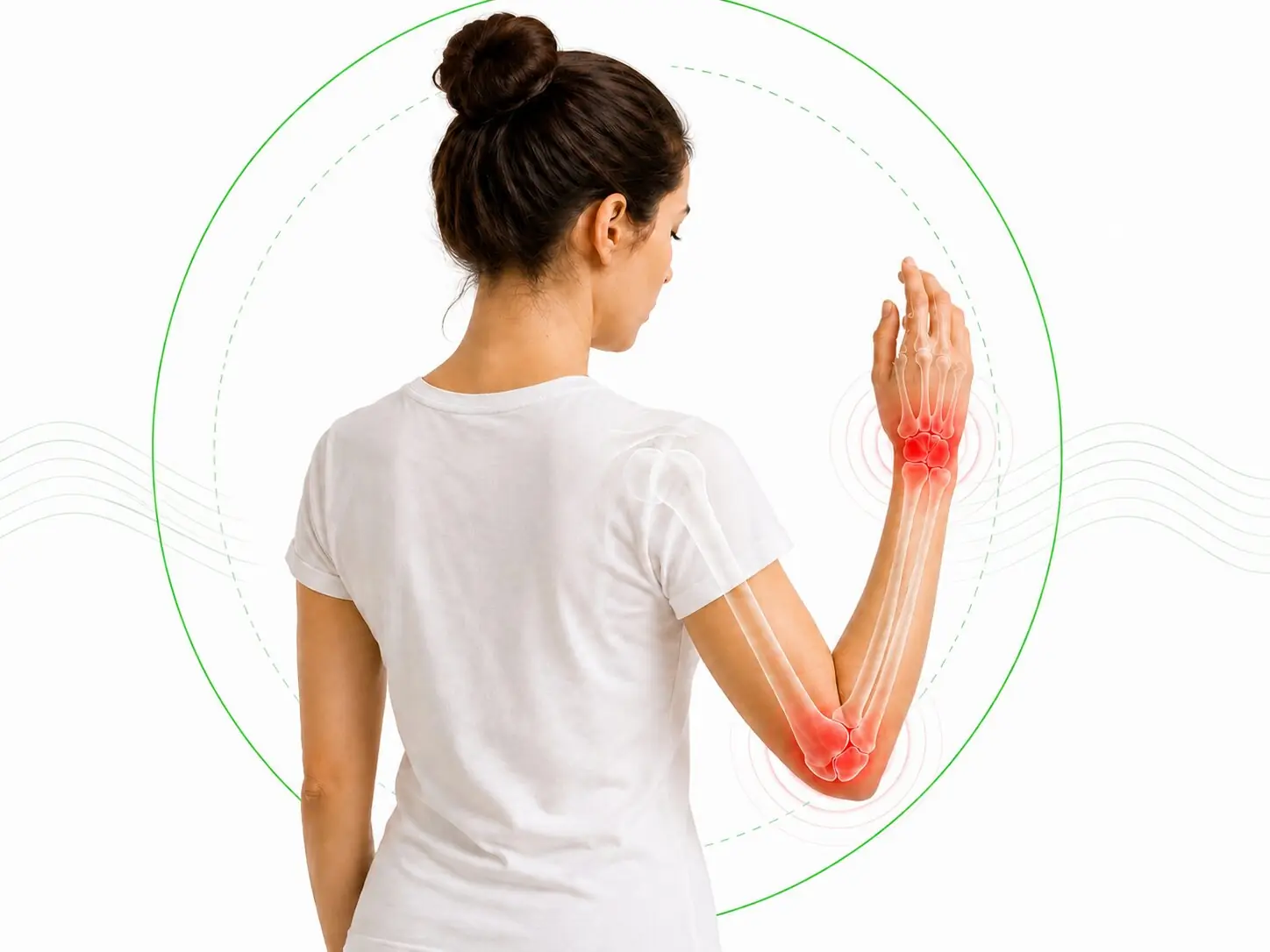
Elbow and Hand Conditions
Pain and movement
When gripping, working with your hands, or fine movements hurt
The elbow, forearm, wrist, and hand work together during writing, sport, computer use, and carrying. Pain after repetitive activity, night-time numbness, and pain after a fall are different situations. Grouping them all as overuse can miss important information.
Understanding the pain
Tendons, joints, and loading
Pain when gripping, turning a key, or lifting a cup may involve tendons, joints, or an injury. The precise area, changes in activity, and swelling matter. A self-test found online cannot replace an examination.
Numbness and weakness are separate symptoms
Describe tingling fingers, waking with numbness, or dropping objects separately from pain. Nerves and nearby areas, including the neck, may need assessment. Persistent loss of sensation is not something to simply massage away.
How it can feel
- pain with gripping, support, or loading the hand
- discomfort in the elbow, wrist, or hand
- hand fatigue with work, sport, or repeated movements
- forearm tension and a feeling of overload
- limited wrist or hand movement
- discomfort after computer, tool, or manual work
Where assessment starts
Discuss grip, repetitive tasks, tools, injuries, and finger symptoms. A physician may assess strength, sensation, and the need for nerve testing or imaging. Wrist pain after a fall deserves attention even when there is no obvious deformity.
History and movement
Discuss when symptoms began, injuries, everyday demands, and what has become difficult. Numbness, weakness, fever, and other health conditions are important parts of the history too.
A clear plan
Discuss suitable options, their limits, and the goals of care. Complementary approaches do not replace medical assessment; some symptoms need a physician’s opinion before treatment is considered.
Review and adjust
Look beyond how you feel immediately after a session. Sleep, movement, and tolerance of activity between visits matter. A lack of progress or new symptoms calls for reassessment, not automatically more of the same treatment.
Building a care plan
Depending on the cause, options may include adjusting activity, individual exercises, temporary support, or specific treatment prescribed by a physician. A brace is not a universal solution. The aim is a workable plan for using the hand, not only temporary relief immediately after a session.
Movement in everyday life
- Vary how you work
- Discuss pauses, alternating tasks, and a more comfortable tool grip. You may not need to give up every hand activity.
- Avoid repeated testing
- Frequent forceful gripping to check the pain is itself a load. Observe ordinary activities instead.
- Rebuild strength gradually
- Weights and repetitions should suit the condition. New weakness or persistent numbness calls for assessment, not harder training.
Recognising progress
Track writing, grip, computer work, and night-time symptoms. Less pain and restored sensation are not the same outcome. Increasingly dropping objects or worsening numbness needs a further medical review.
Preparing for a consultation
- When symptoms began, what aggravates them, and what helps.
- Two or three movements or activities you would like to return to.
- A list of medicines and supplements, relevant surgery details, and reports you already have. Do not arrange new scans in advance without a medical recommendation.
When to seek medical help
Seek urgent assessment
Severe pain after injury, changed shape, inability to hold an object, loss of sensation, or hot swelling with fever needs urgent medical help.
Emergency care
Sudden arm pain together with chest heaviness or squeezing requires emergency care. Do not wait for a routine elbow or hand consultation.
Educational information for adults, not an individual diagnosis. With warning symptoms, do not wait for a reply to an appointment form: contact local urgent or emergency medical services.
Common questions
Is computer use necessarily the cause?
No. Work demands can influence symptoms, but pain and numbness have different possible causes. History, examination, and the specific tasks matter.
Can I wear a support all the time?
Do not choose ongoing immobilisation on your own. The kind of support and how long to use it depend on the condition and should be discussed with a medical professional.
Sources and further reading
Let’s discuss your situation
Tell us what makes movement, work, or rest difficult. Your symptoms and goals are the starting point, rather than a preset course of procedures.
Request Appointment