
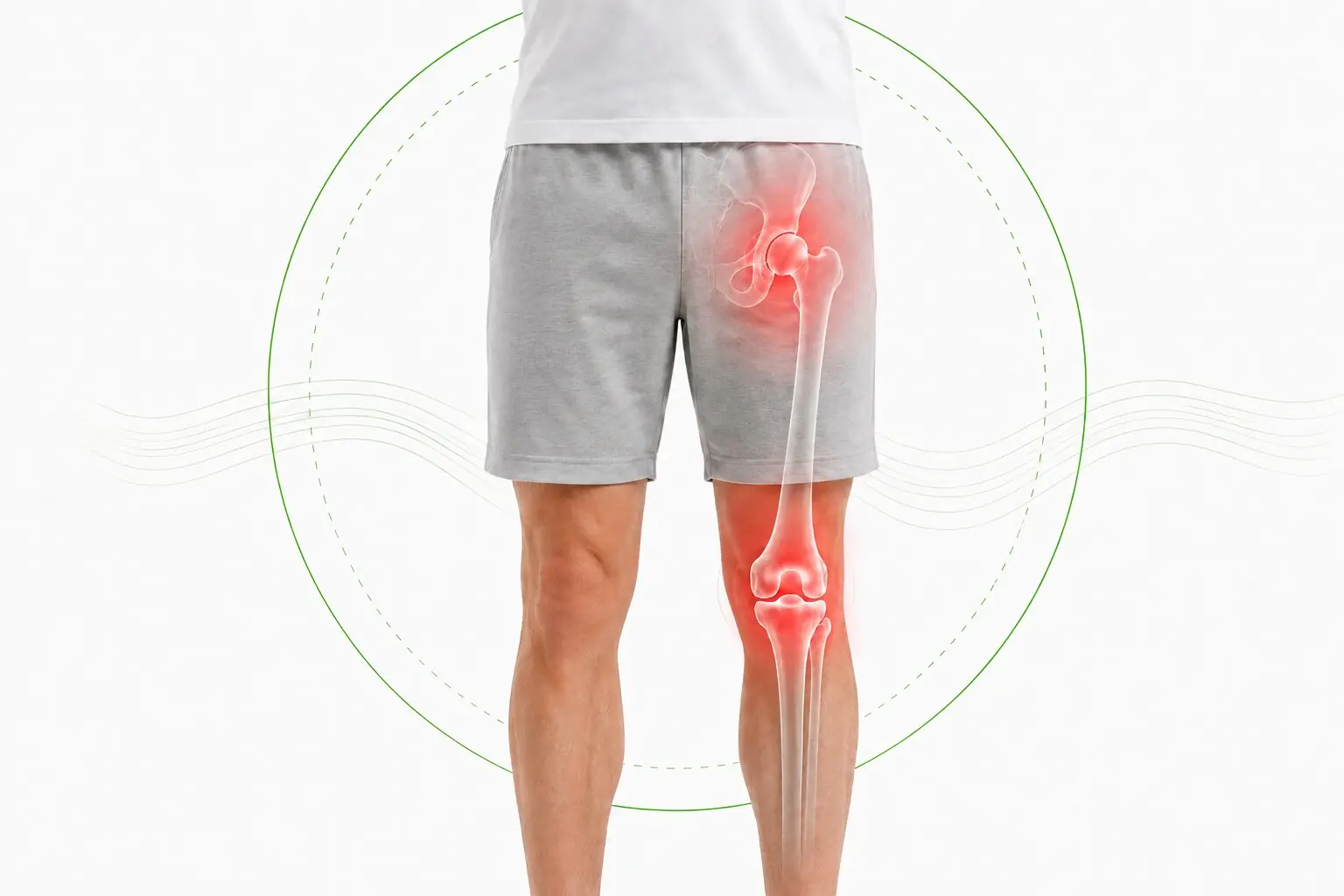
Pelvis, Hip, and Knee Conditions
Pain and movement
When walking, stairs, and putting weight on your leg become harder
Pain around the pelvis, hip, and knee can appear in the groin, beside the hip, around the knee, or during the first steps after rest. These areas work together, but they do not represent a single diagnosis. Where symptoms occur and how loading changes them are useful starting points.
Understanding the pain
The joint and surrounding tissues
Possible contributors include osteoarthritis, tendon or soft-tissue problems, and an injury. Similar pain does not establish an identical cause. A history of a fall, swelling, morning stiffness, and difficulty bearing weight helps a physician decide what needs investigating.
Pain and everyday function
Discuss a limp, a feeling of instability, difficulty rising from a chair, or trouble putting on shoes. Note whether every step hurts or symptoms appear after a certain distance. This description is more useful than trying to name the affected structure yourself.
How it can feel
- pain with walking, stairs, and standing up
- stiffness in the pelvis, hip, or knee after rest
- muscle tension around the hip joint
- increased load on the leg and changed gait
- discomfort after training or long periods on the feet
- limited movement with squatting, bending, or stepping
Where assessment starts
Assessment considers walking, weight bearing, available movement, and injury history. When appropriate, a physician checks other possible sources of pain and decides whether imaging, blood tests, or an orthopedic opinion are needed. Existing reports are considered alongside symptoms, not instead of an examination.
History and movement
Discuss when symptoms began, injuries, everyday demands, and what has become difficult. Numbness, weakness, fever, and other health conditions are important parts of the history too.
A clear plan
Discuss suitable options, their limits, and the goals of care. Complementary approaches do not replace medical assessment; some symptoms need a physician’s opinion before treatment is considered.
Review and adjust
Look beyond how you feel immediately after a session. Sleep, movement, and tolerance of activity between visits matter. A lack of progress or new symptoms calls for reassessment, not automatically more of the same treatment.
Building a care plan
Care depends on the cause. Individually adapted exercise is important in osteoarthritis, while an injury may require specific restrictions or treatment. Hands-on or complementary options should be discussed within a plan for safely restoring function, rather than as a promise to repair a joint.
Movement in everyday life
- Break up activity
- Discuss shorter walks and pauses instead of one long effort that leaves symptoms much worse afterwards.
- Choose a practical goal
- Getting up comfortably, walking a familiar route, or managing a flight of stairs gives progress a useful everyday meaning.
- Build back gradually
- Do not repeatedly test the joint with deep squats through sharp pain. After injury, a medical professional should determine safe weight bearing.
Recognising progress
Track walking distance, stairs, and recovery after activity. One easier day does not prove full recovery. Increasing swelling or worsening function is a reason to review the plan rather than keep increasing the load.
Preparing for a consultation
- When symptoms began, what aggravates them, and what helps.
- Two or three movements or activities you would like to return to.
- A list of medicines and supplements, relevant surgery details, and reports you already have. Do not arrange new scans in advance without a medical recommendation.
When to seek medical help
Seek urgent assessment
A hot, swollen joint, particularly with fever; sudden severe pain; a locked knee; or inability to bear weight needs urgent medical assessment.
Emergency care
Severe pain after a fall, deformity, or inability to walk after an injury needs emergency assessment, not a routine treatment session.
Educational information for adults, not an individual diagnosis. With warning symptoms, do not wait for a reply to an appointment form: contact local urgent or emergency medical services.
Common questions
Does knee pain always come from the knee itself?
No. The history and movement of nearby areas matter too. The location of pain alone does not always identify its source.
Can I exercise with osteoarthritis?
Movement is usually part of care, with the activity and amount adapted to your condition and tolerance. A new major swelling or injury needs assessment first.
Sources and further reading
Let’s discuss your situation
Tell us what makes movement, work, or rest difficult. Your symptoms and goals are the starting point, rather than a preset course of procedures.
Request Appointment